McKenzie River Discovery Center
Located on the McKenzie River near Vida, Oregon, the McKenzie River Discovery Center tells three stories: the landscape, fish and ecology, and boat culture. Covering 5,000 sq feet in three buildings across 46 acres, I created the visual identity, signage, wall graphics, interpretive panels, and illustrations for the space.
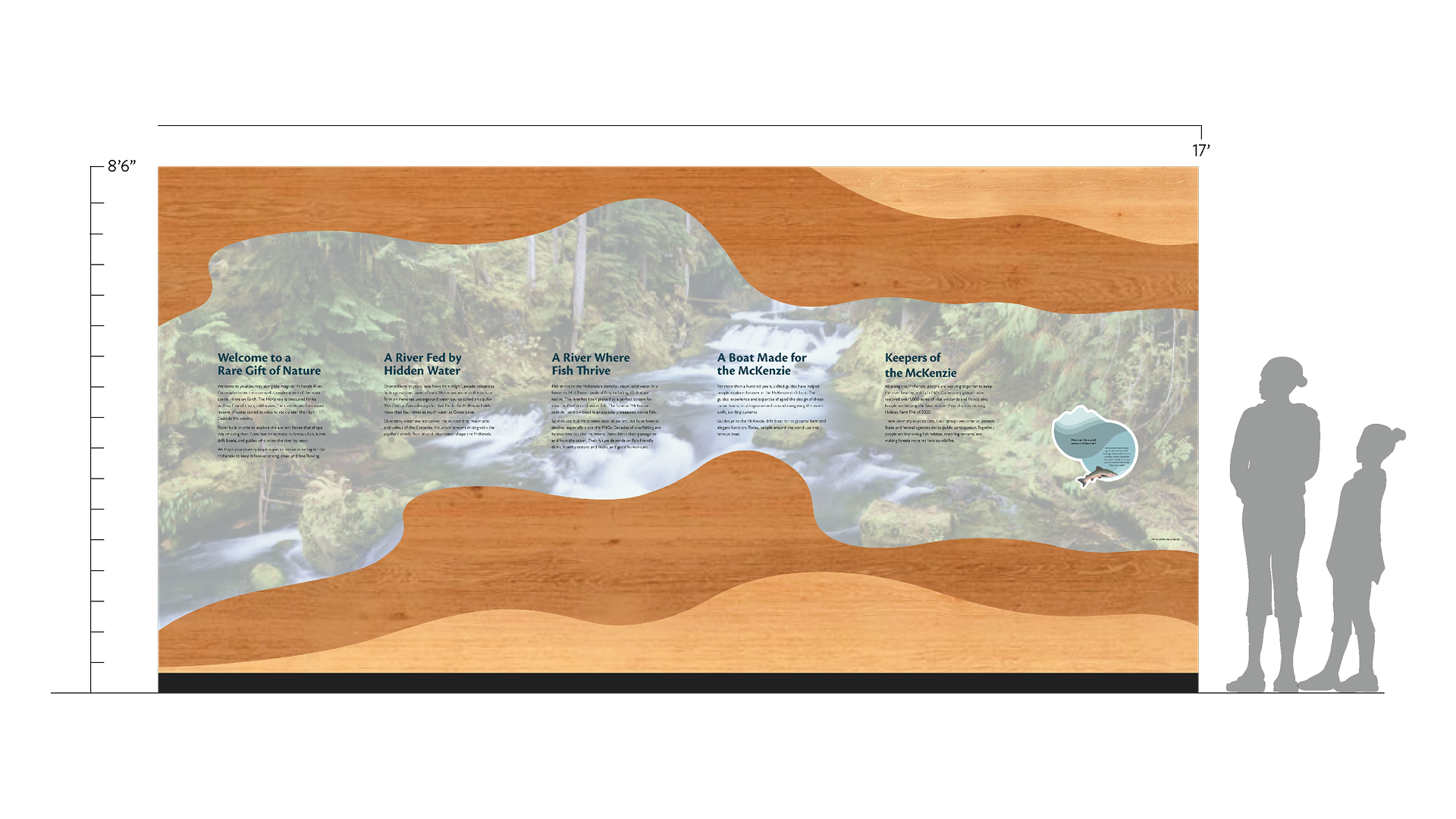
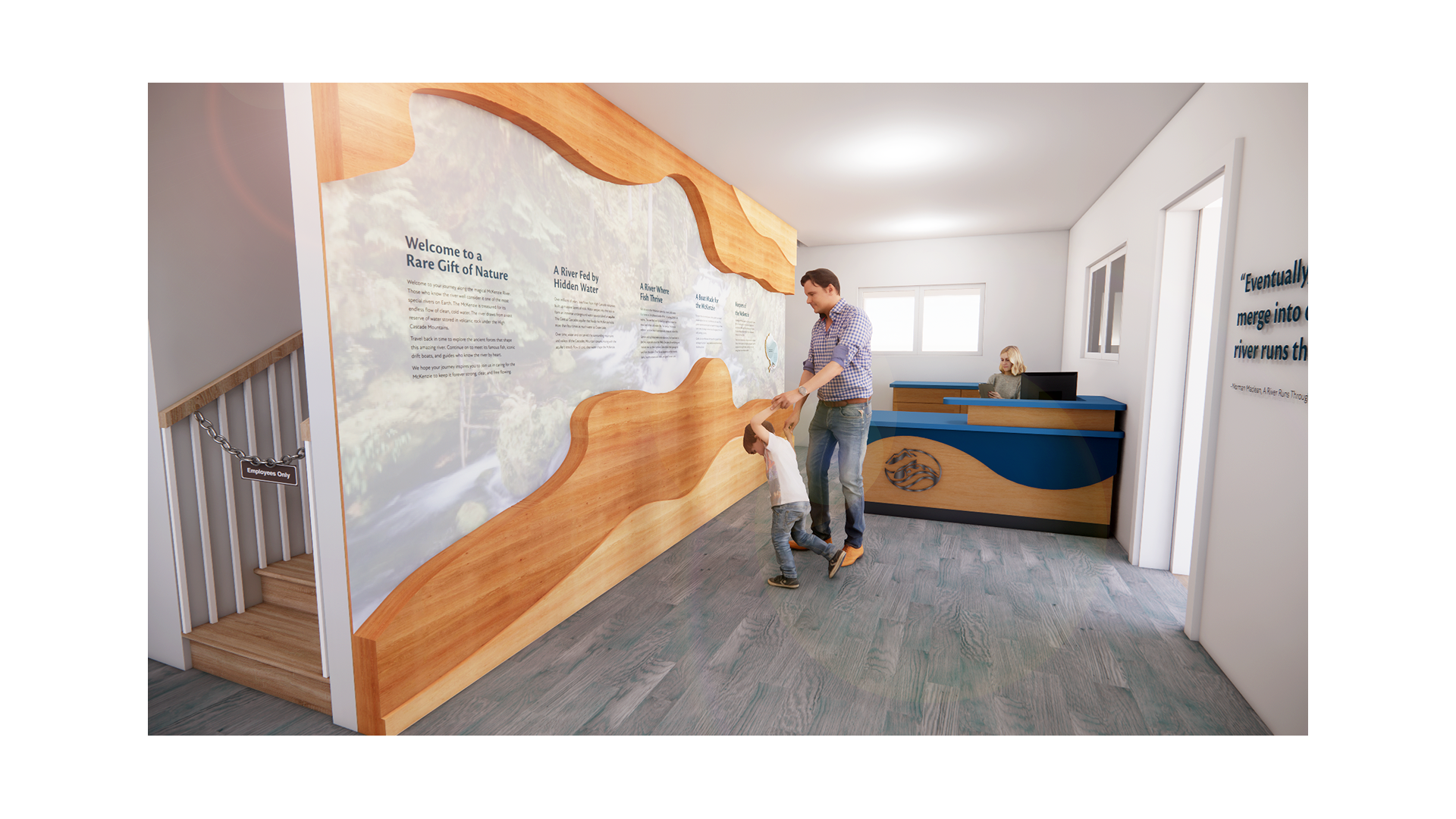
This is the Welcome Wall, welcoming visitors to the space, and providing a summary of the exhibit’s sections. The wooden shapes around the content is modeled after the actual shape of the McKenzie River, and the two layers of wood reference the colors of the historic McKenzie River drift boats. The background image is of the McKenzie River itself.
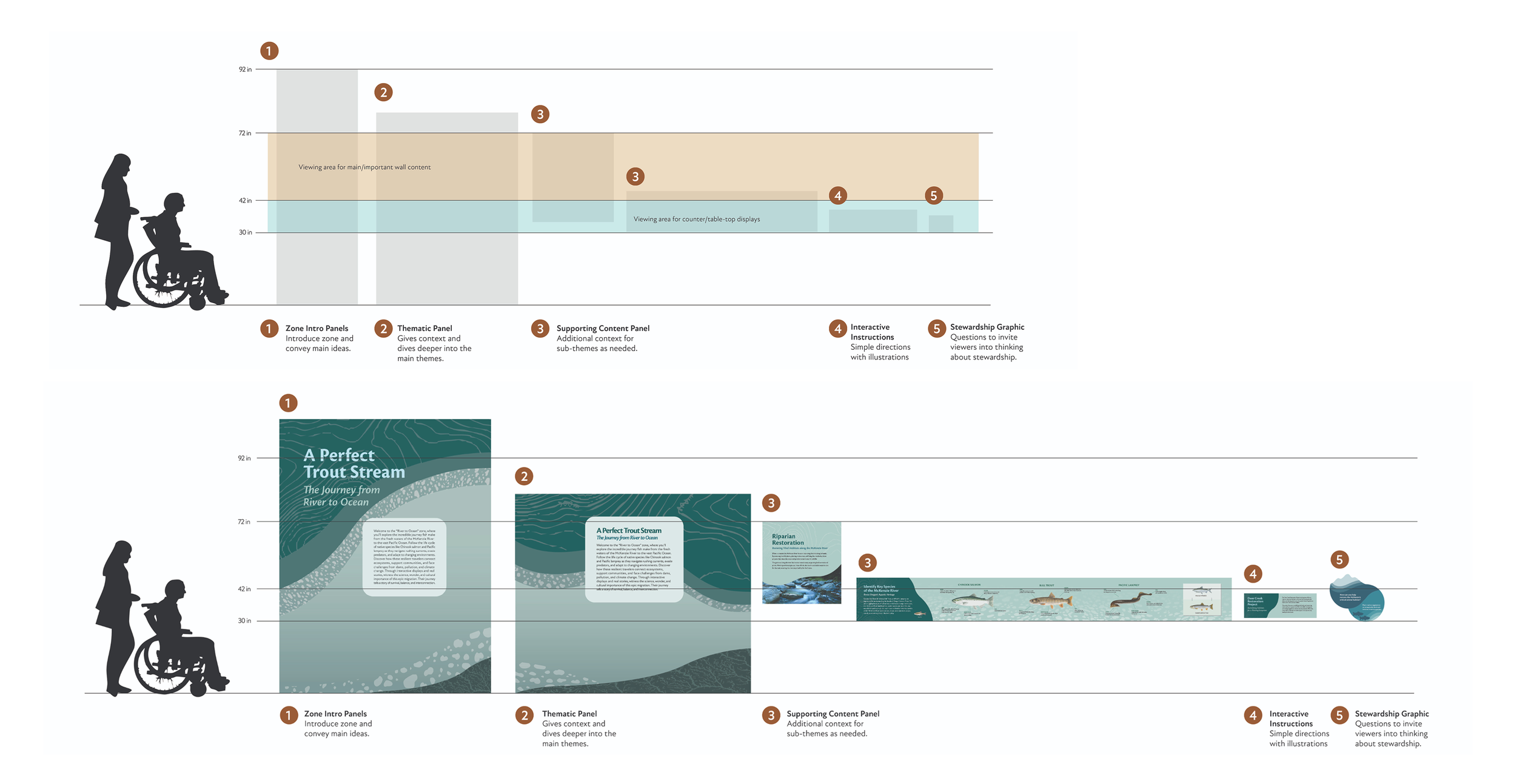
This is a summary of the graphics panel hierarchy I created for the exhibition. It shows an example of every type of panel created, and how each works with ADA viewing guidelines.
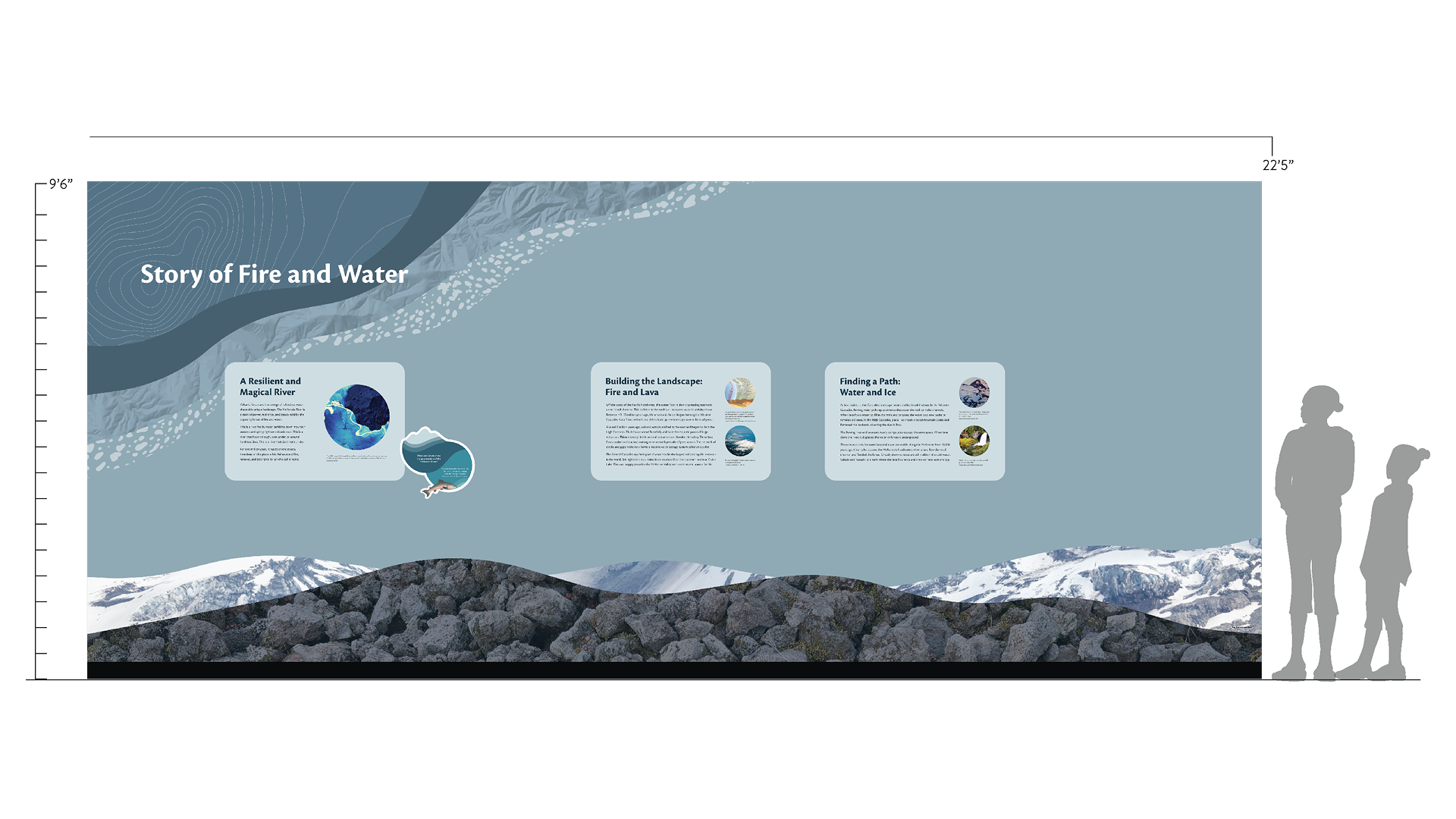
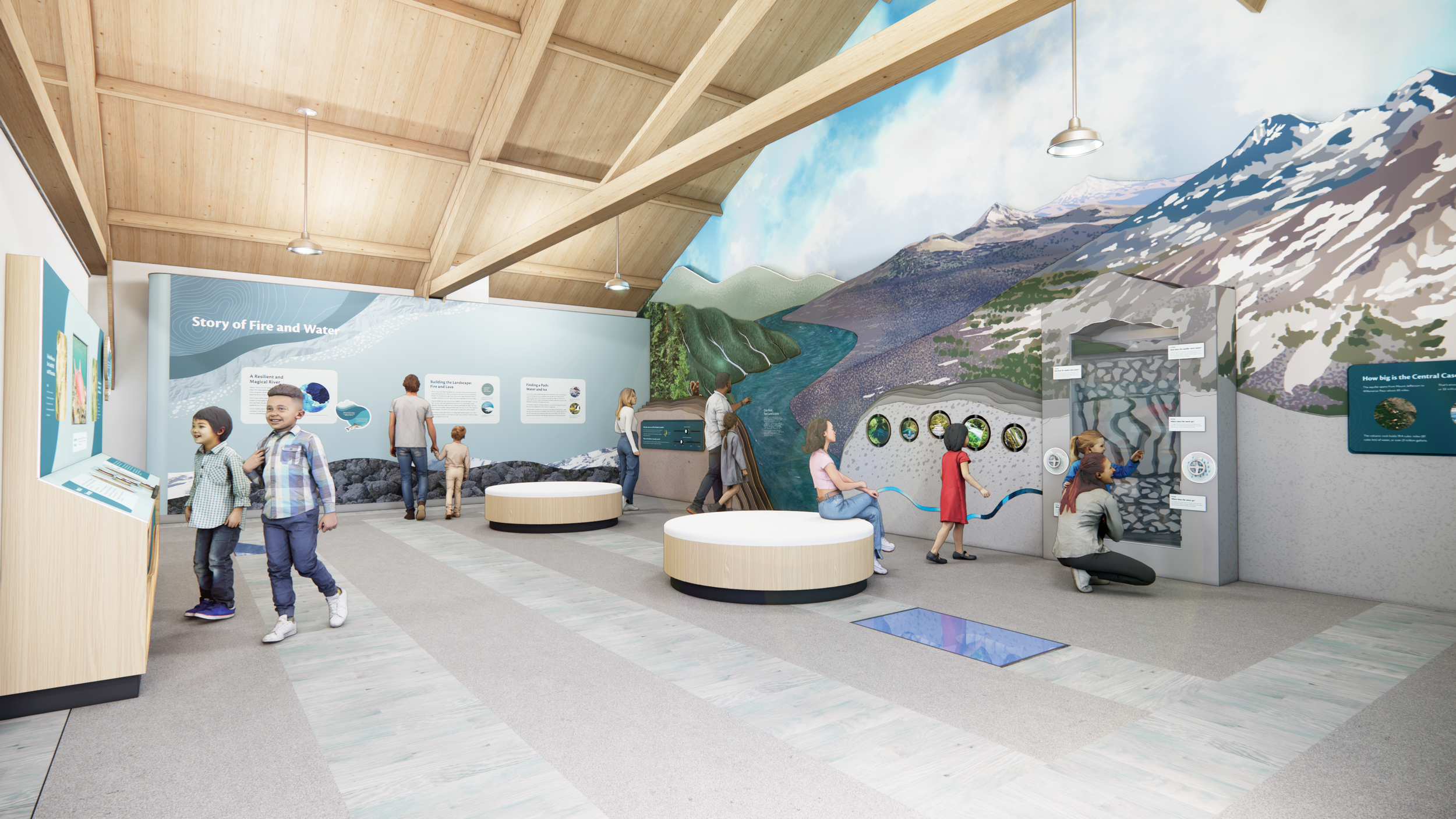
This is the Fire & Water wall, a wall featuring panels explaining the geological history of the region. Visually, the wall can be seen as a mountain landscape from the side, or as viewing a river from above. This was designed intentionally to reference the movement of rocks, water, lava and ice that have shaped the area.
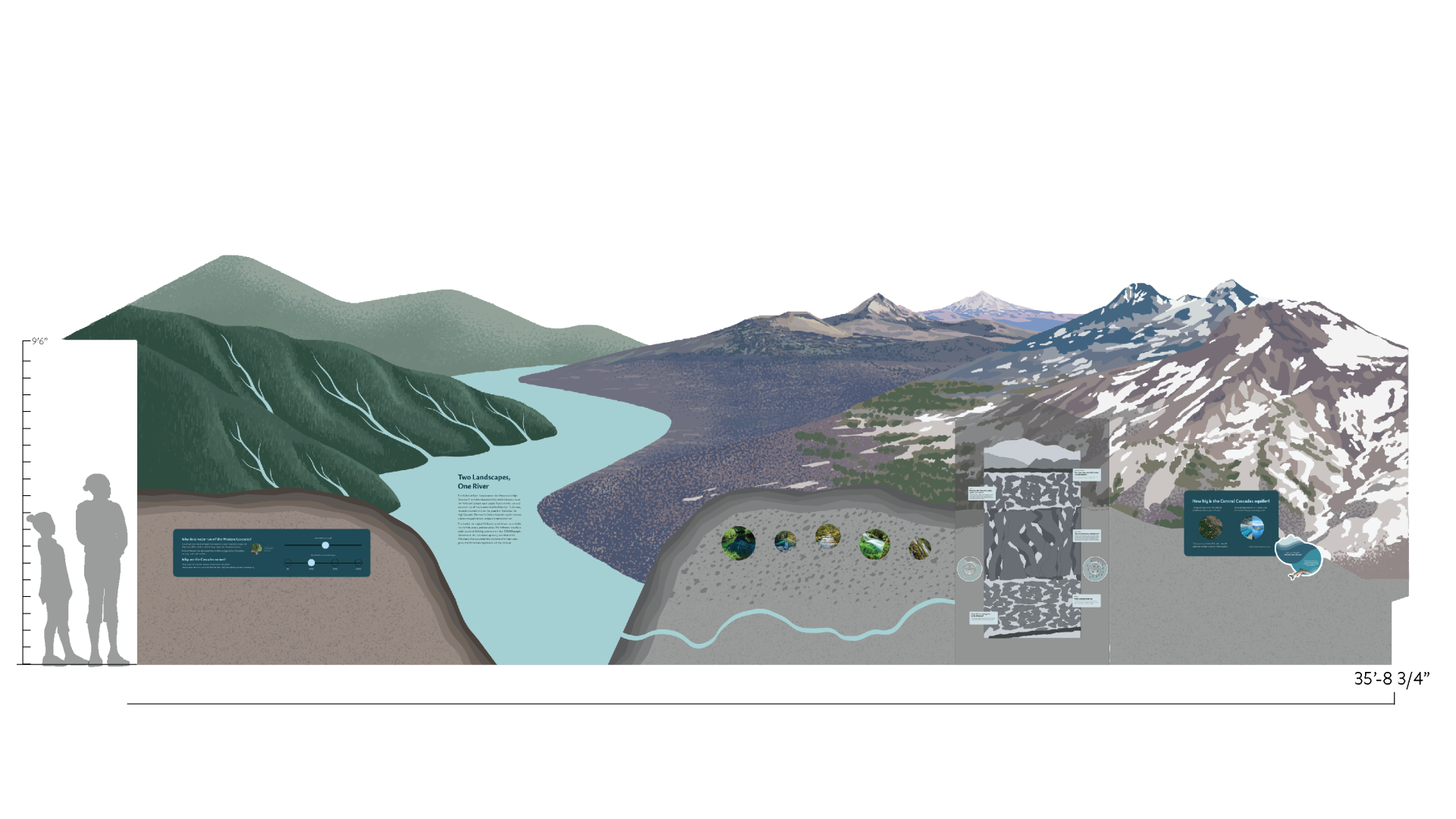
This is the Tactile Wall, a giant wall featuring interactives, panels and a projected screen, all explaining the geology and hydrology of the region. I illustrated and designed the 2D look of the wall; it will be fabricated with multiple layers to create depth, and the front layers will feature raised, 3D touchable surfaces, to get a tactile feeling of the terrain.
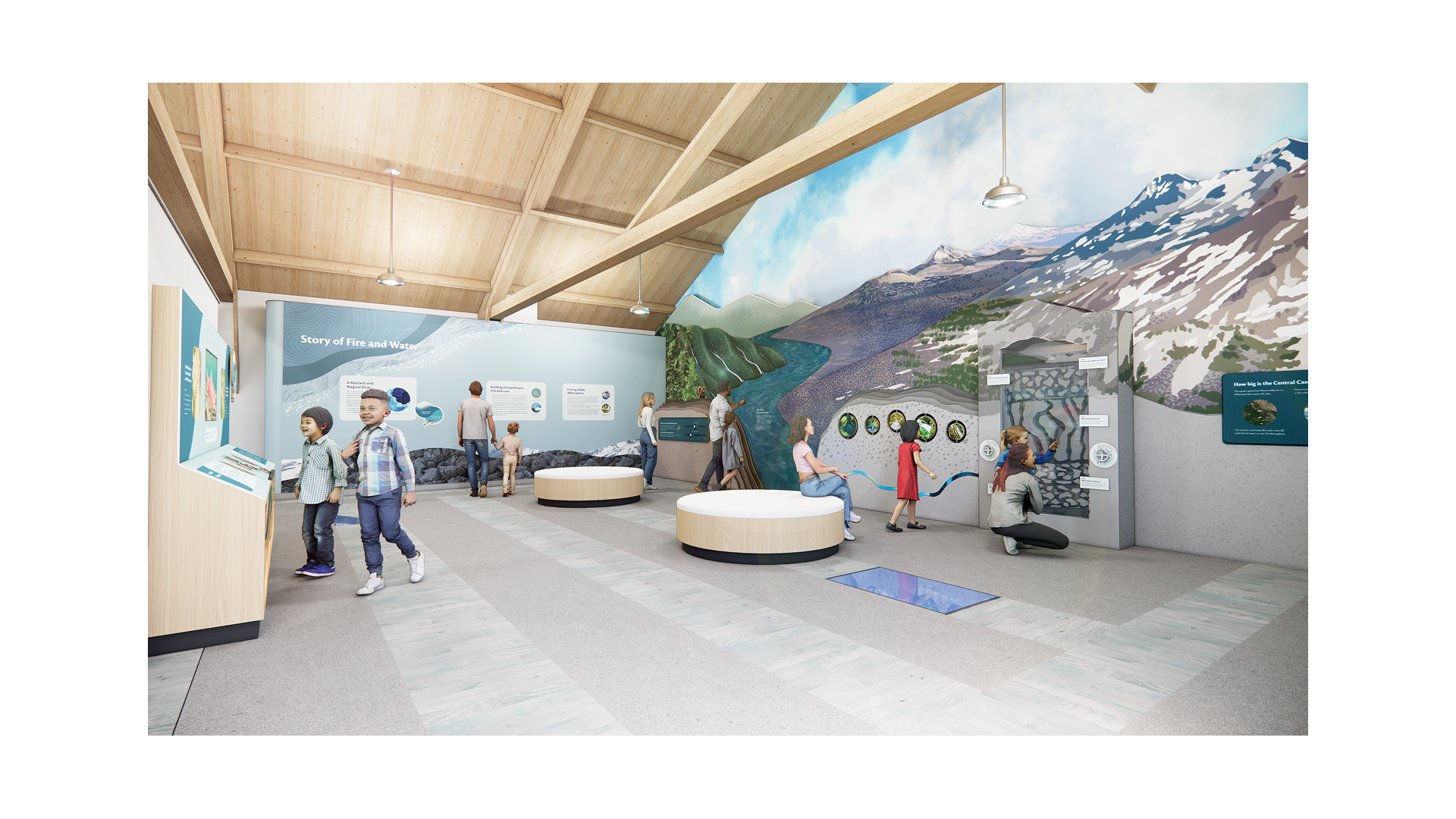
This is a 3D rendering of the first half of this building’s exhibit, focusing on the landscape and region’s geological history. The exhibit is built within a historic salmon hatchery.

These illustrations are for a interactive display titled “Salmon Survival.” They depict the local Spring Chinook salmon’s lifecycle, featuring elements specific to the McKenzie River region.
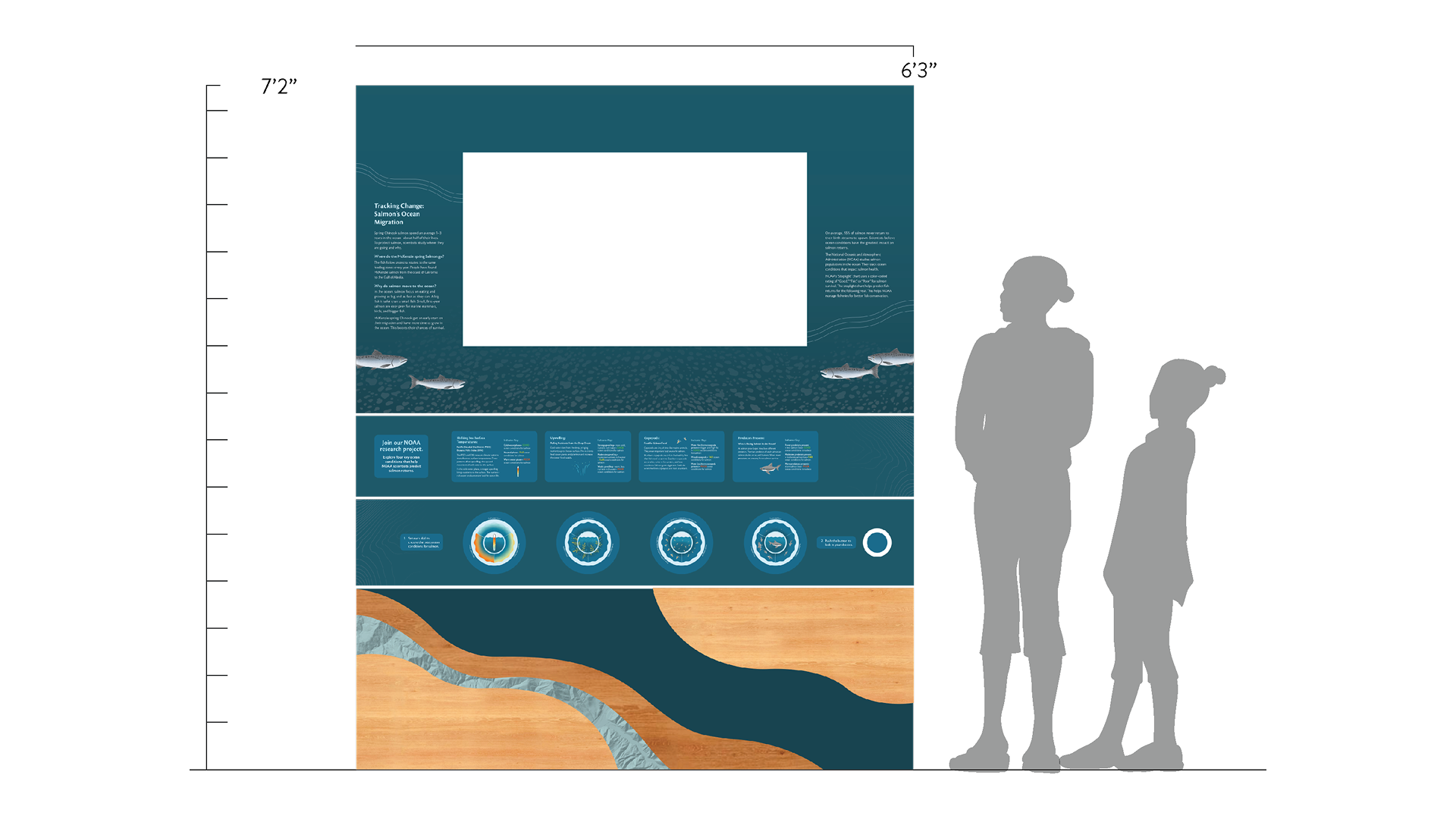
I designed the 2D graphics for this interactive, where visitors learn how NOAA forecasting works with salmon migration patterns. I created specific illustrations for the panels and dials, based on the interactive’s content.
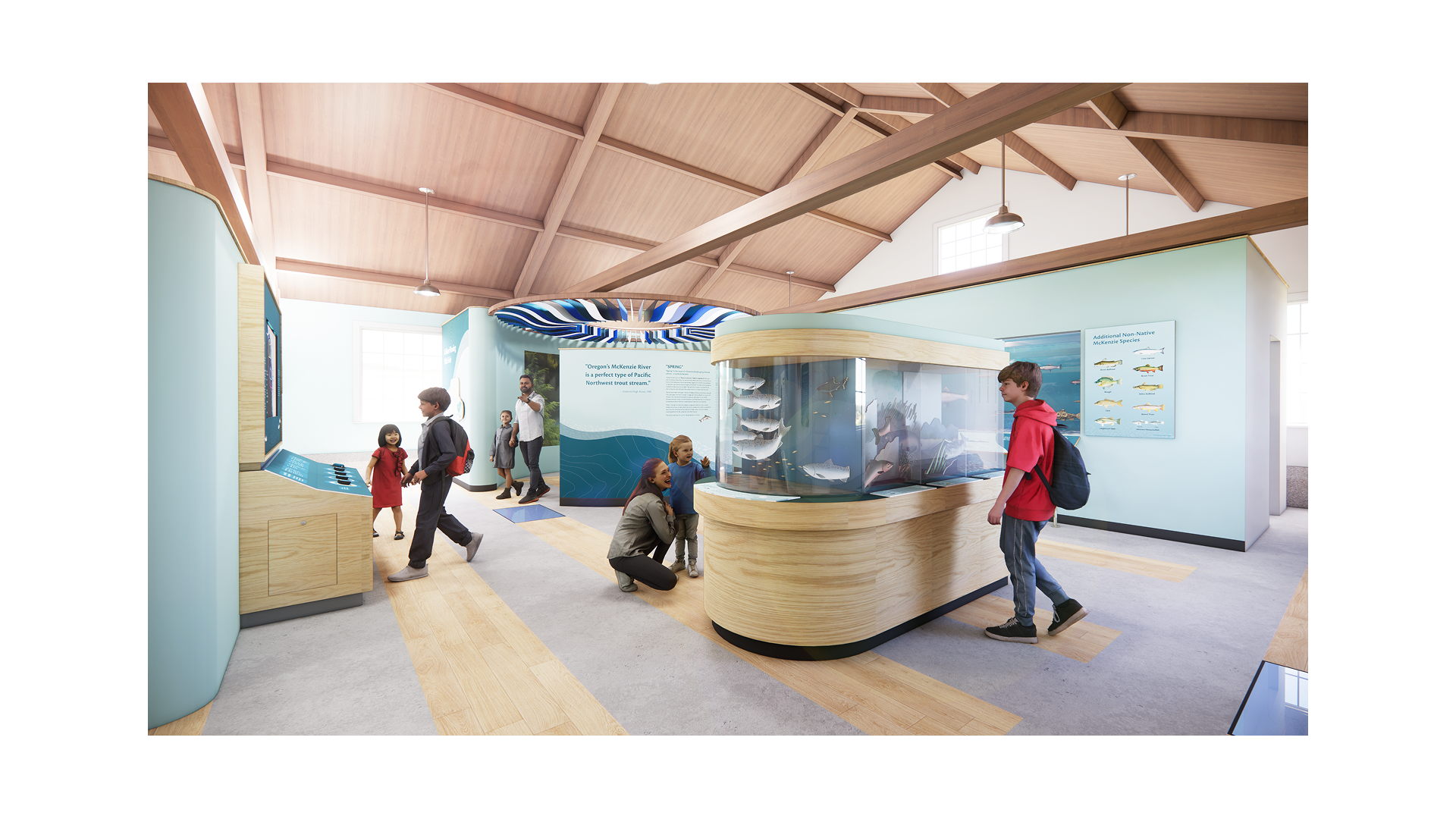
A 3D rendering of the other half of the building, focused more on the different fish and river species of the area, and other walls and panels I designed.
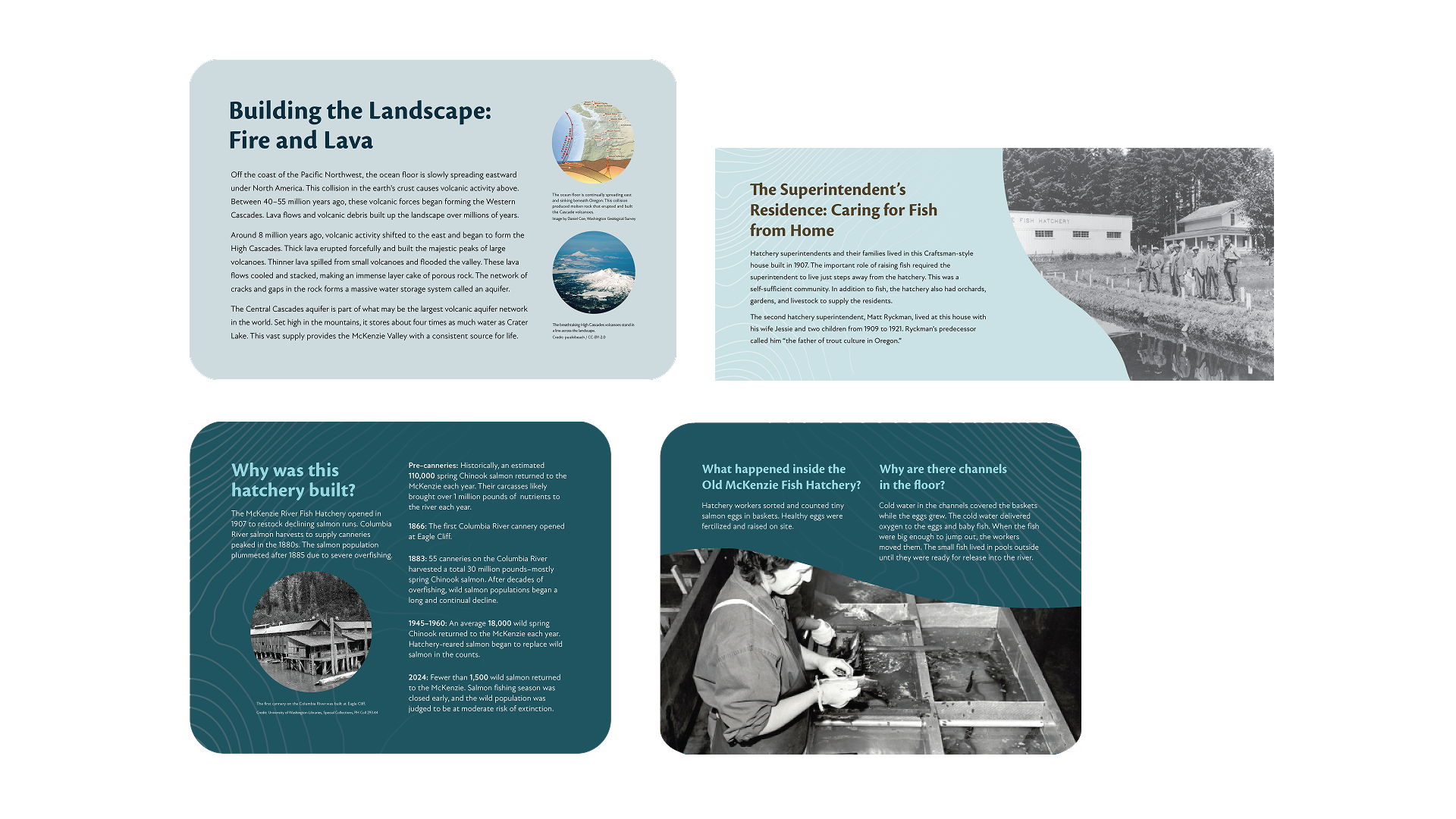
A few examples of different panels I designed for the exhibit, featuring photos and content about various topics within the exhibit.
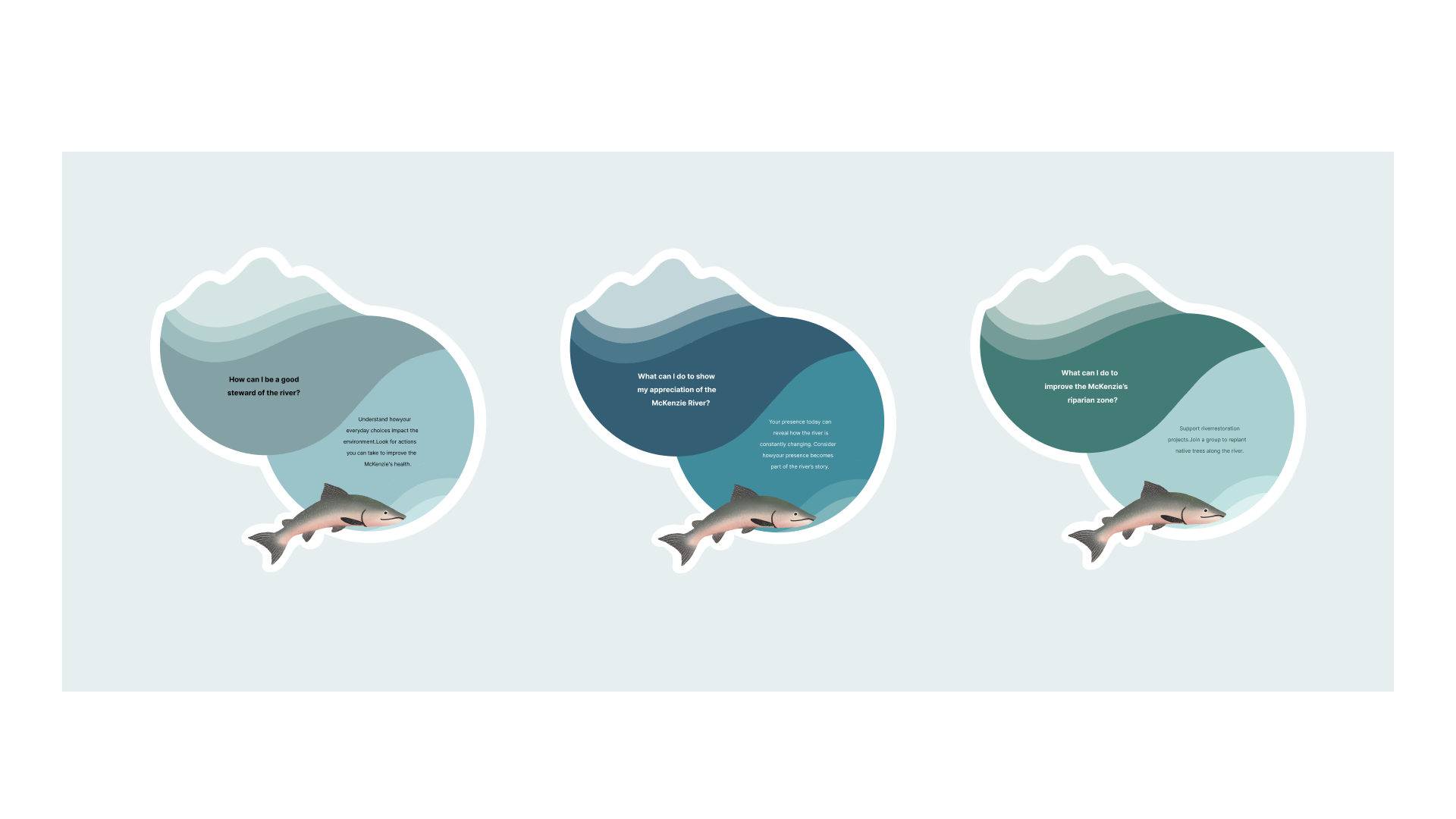
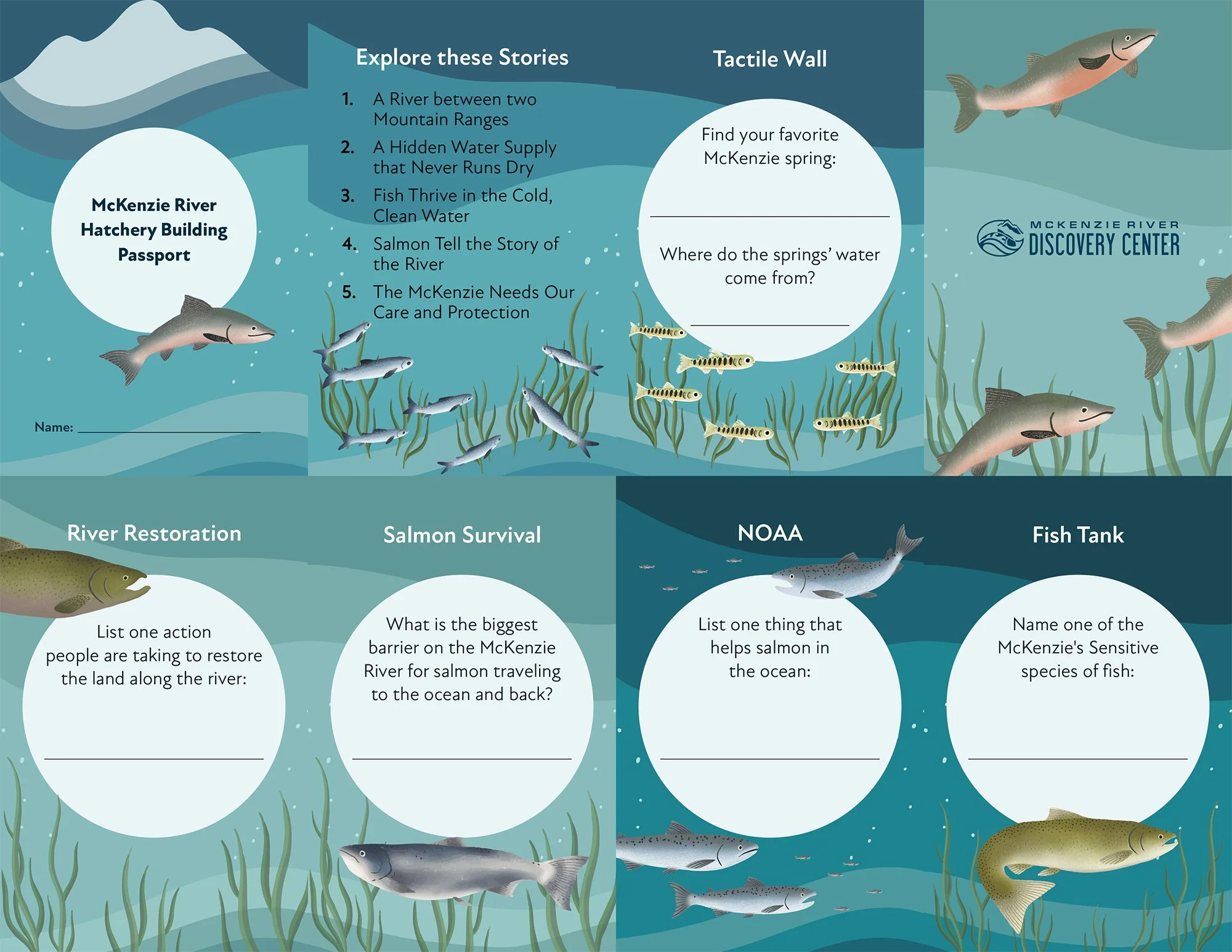
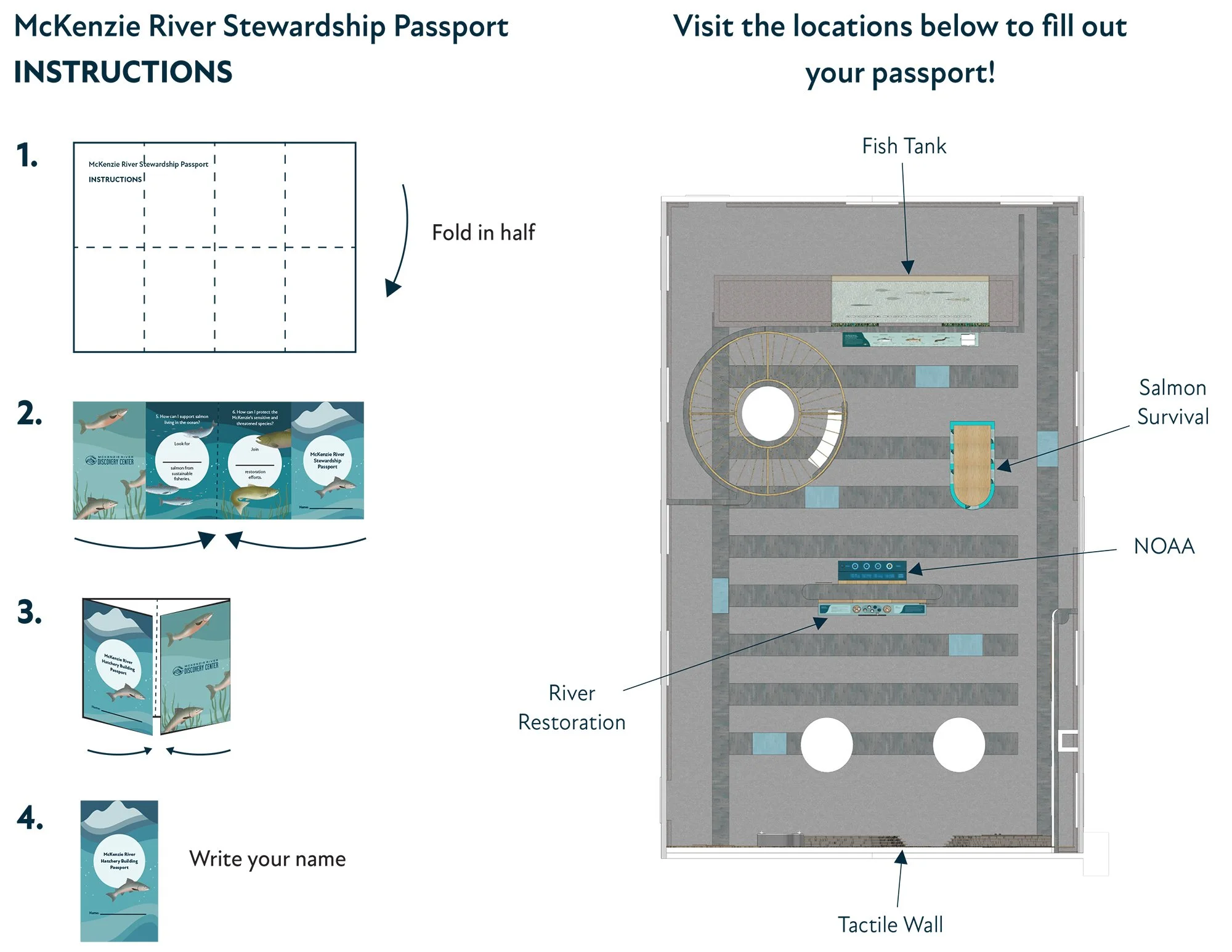
This is a system of smaller panels I designed to live throughout the exhibit, as well as a foldable, interactive passport for visitors below. The panels can work on their own, asking reflection questions to visitors about the exhibit they’re featured upon, or can work in tandem with the passport, inviting visitors to engage deeper with the space. They both feature the Spring Chinook salmon, who became a mascot for the center.
The McKenzie River Discovery center is estimated to be open to the public in 2027.
You can visit https://www.mckenziediscoverycenter.org/ to learn more.